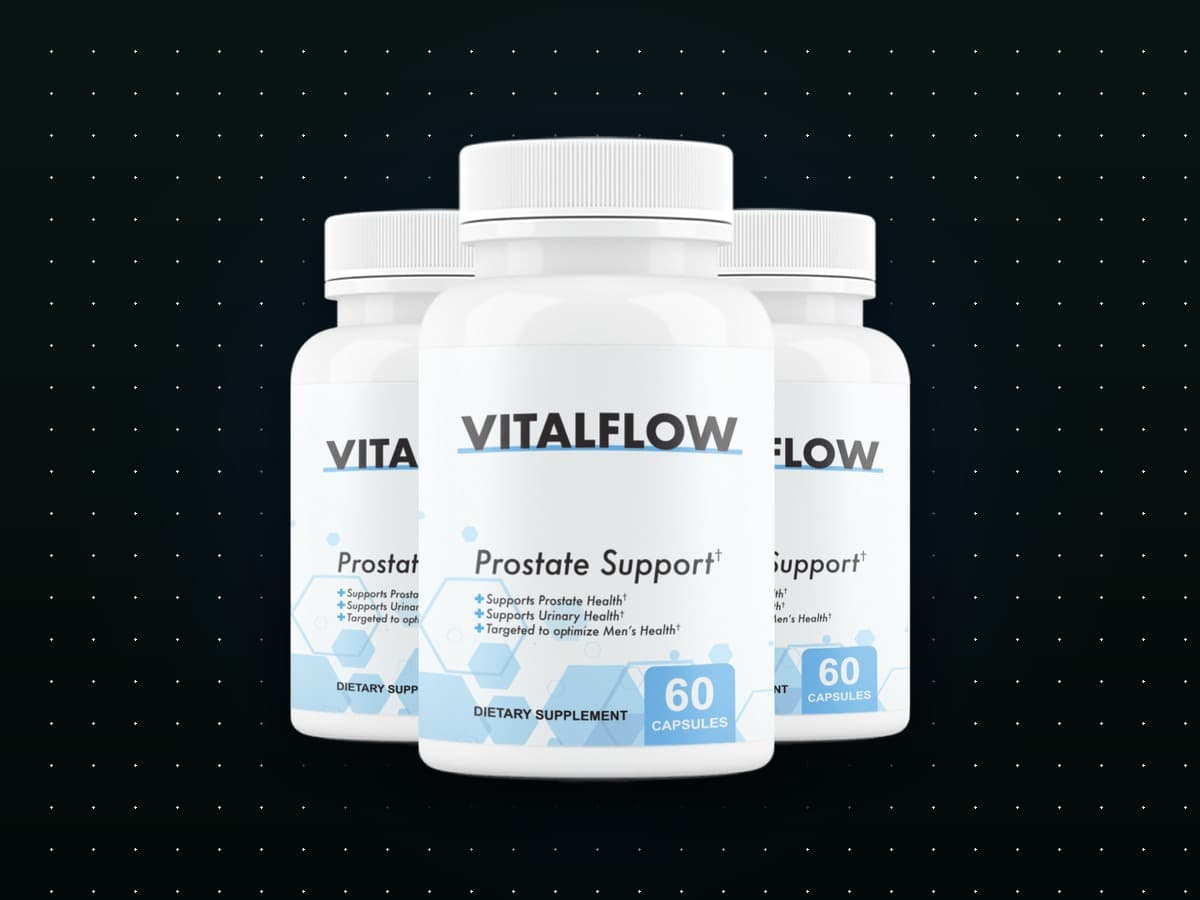
 Bundles (price shown at checkout)
VitalFlow Review (2026): Ingredients, Evidence & Honest Verdict
VitalFlow packs 34 ingredients into a prostate formula and leans on saw palmetto — the herb that failed the biggest, most rigorous trials. But one ingredient in there does have real evidence. Here is the honest breakdown, including a safety flag the sales page never mentions.
VitaGlobe Editorial Team
Independent product research
Bottom line up front
If the night-time bathroom trips, the urgency, and the weak stream have started quietly running your life, VitalFlow speaks straight to that frustration. But first, the part that matters more than any sale: prostate and urinary symptoms — including a rising PSA — can be early signs of BPH, infection or even prostate cancer, so get checked by a doctor before you self-treat. If you have already been evaluated and want a prostate-support add-on alongside your care, our review lays the formula out honestly. Then judge it on your own body — check the money-back window first and order from the official site so the guarantee actually applies.
When the Bathroom Starts Planning Your Day
Up twice, three times a night. A stream that has quietly lost its confidence. The habit of scanning for the nearest restroom before you commit to anything. If that is your reality, VitalFlow is aimed squarely at you — 34 ingredients, saw palmetto front and centre, and the familiar promise of a prostate “back to normal.” We are going to do what the sales page will not: tell you which part of this formula genuinely has science behind it, which part failed the biggest trials it ever faced, and the one ingredient that deserves a safety conversation.
What VitalFlow Actually Is
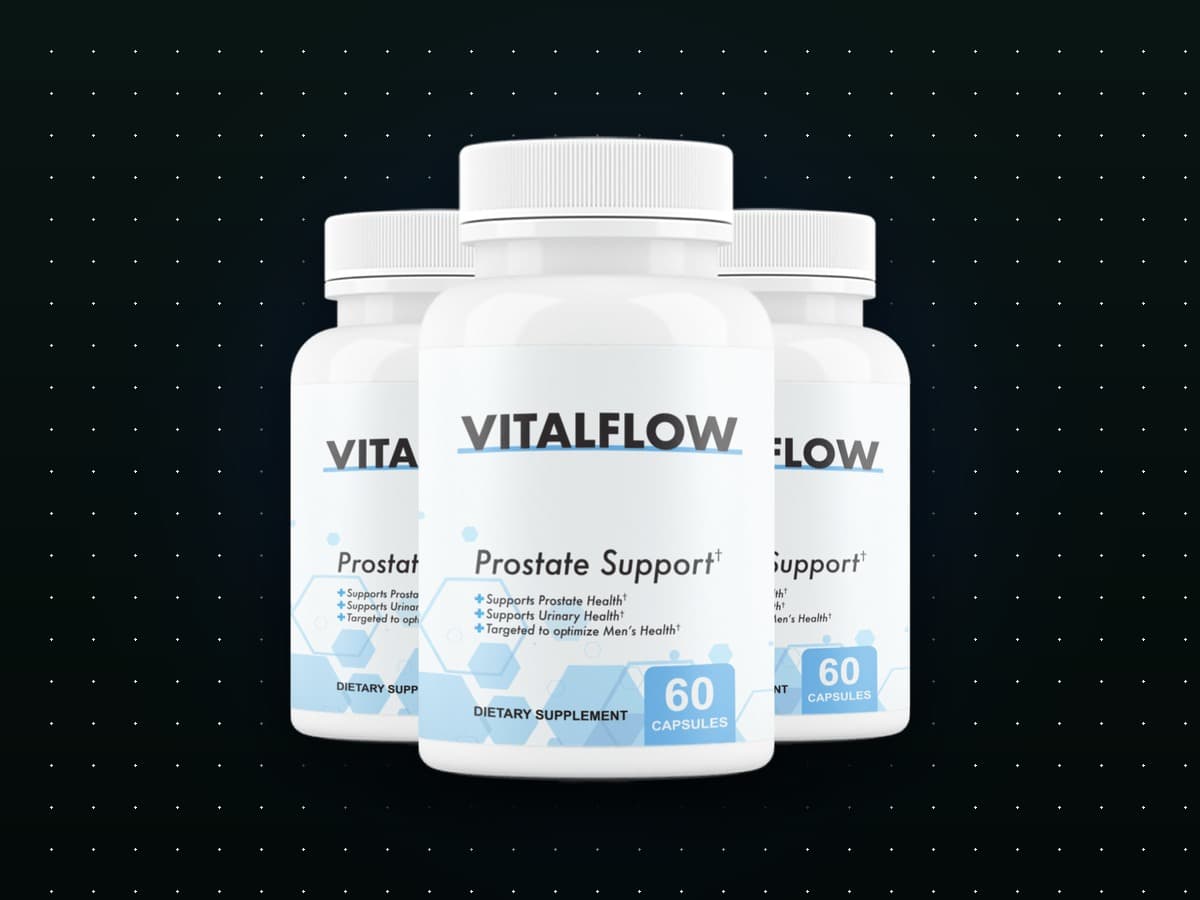
VitalFlow is a capsule supplement sold direct online, positioned to support prostate health and normal urinary flow. It is marketed around a large blend — up to 34 ingredients — built on saw palmetto, beta-sitosterol, pygeum and nettle root, plus a Japanese mushroom trio (maitake, reishi, shiitake), graviola, lycopene and minerals including zinc, selenium and copper. No individual doses are published before checkout, and no Supplement Facts panel is shown. Everything below is based on that public information plus peer-reviewed research on the named ingredients — we have not tested the product itself.
The Idea Behind It — the Classic Prostate Stack, Supersized
Conceptually, VitalFlow is the standard prostate stack with the volume turned up. The core logic is legitimate: saw palmetto, beta-sitosterol, pygeum and nettle root are the botanicals most associated with urinary comfort, and plant sterols in particular have a plausible mechanism. Where it gets slippery is the scale. Thirty-four ingredients is not a formulation strategy — it is a marketing strategy. A long list looks like value, but with no doses published, it is impossible to know whether the one ingredient with the best evidence is present at anything close to a researched amount. That tension is the whole story of this product.
What the Research Actually Shows
Here is the honest split. Saw palmetto, the headline: large, rigorous randomized trials — including the NIH-funded CAMUS trial — found it no better than placebo for BPH symptoms, even at higher doses (Barry, JAMA 2011). That is the strongest evidence available, and it is disappointing. Beta-sitosterol, by contrast, is the quiet winner: a Cochrane review of plant sterols found it may genuinely improve urinary symptoms and flow — this is the ingredient that could actually earn its place, if it is dosed properly. Pygeum shows modest signals from small, low-quality studies (Cochrane review). Graviola brings no prostate evidence at all, plus a nerve-toxicity caution worth raising with a doctor. And the minerals? No supplement mineral is established to reduce prostate cancer risk, whatever some affiliate pages say. For grounded context, see our guide to natural prostate health support and why the dose matters more than the ingredient list.
Before You Buy — Three Honest Cautions
First, see a doctor. Urinary symptoms and a rising PSA can point to BPH, infection or prostate cancer — conditions no capsule addresses. A supplement is an add-on to medical care, never a substitute for the evaluation. Second, the doses are hidden. With 34 ingredients and no Supplement Facts panel, you cannot confirm that beta-sitosterol — the one component with real support — is present at a meaningful amount. Third, the graviola question. It contributes nothing evidence-wise and carries a legitimate annonacin/nerve-toxicity caution; because the dose is undisclosed, that is worth mentioning to your physician, especially if you take anything affecting the nervous system. See also our guide to supplement and medication interactions.
The Bottom Line
VitalFlow contains one genuinely good idea — beta-sitosterol — wrapped in an opaque 34-ingredient blend, led by a herb that failed its biggest trials, and carrying an ingredient that has no business being in a prostate formula. If the beta-sitosterol is well dosed, some men may notice something; the trouble is that you have no way to know, because nothing is disclosed. Our honest read: if plant sterols interest you, buy a product that publishes its dose and gets third-party tested — you will know exactly what you are paying for. And get your symptoms checked first. This is general information, not medical advice; supplements are not evaluated by the FDA and are not intended to diagnose, treat, cure or prevent any disease.
Ingredients & the evidence
Evidence below is for the individual ingredients in published research — not for the finished product, whose doses are not disclosed.
Saw Palmetto
Limited evidenceDose: Not disclosed
The formula’s headline herb and the most popular botanical for prostate/urinary symptoms. The honest catch is significant: while early, smaller studies looked promising, large rigorous randomized trials (including the NIH-funded CAMUS trial) found saw palmetto no better than placebo for BPH symptoms, even at higher doses. The best available evidence is disappointing, not strong.
Beta-Sitosterol
Moderate evidenceDose: Not disclosed
The most interesting ingredient here, and the one the marketing under-sells. A Cochrane review of plant sterols found beta-sitosterol may genuinely improve urinary symptoms and flow measures in BPH. It is the strongest evidence-backed component of this formula — the caveat being that VitalFlow does not disclose how much of it you actually get.
No strong human cognitive trials identified for this ingredient at the time of writing.
Pygeum (Prunus africana)
Preliminary evidenceDose: Not disclosed
An African plum-bark extract used for urinary symptoms. A Cochrane review found it may modestly improve some BPH symptoms, but the underlying studies were small and of low quality, so the result is uncertain rather than established.
Graviola (Annona muricata)
No good evidenceDose: Not disclosed
A safety note the sales page does not raise. Graviola has no meaningful human evidence for prostate symptoms, and it contains annonacin — a compound that laboratory and epidemiological research has linked to nerve toxicity, with regular heavy consumption associated with an atypical parkinsonism seen in some Caribbean populations. Occasional small amounts in a blend are not the same as heavy consumption, but this is a genuine reason for caution — and a reason the undisclosed dose matters.
No strong human cognitive trials identified for this ingredient at the time of writing.
Nettle Root
Limited evidenceDose: Not disclosed
Often paired with saw palmetto for urinary comfort. Human evidence is limited and mostly from small studies, frequently in combination products, which makes its individual contribution hard to isolate.
No strong human cognitive trials identified for this ingredient at the time of writing.
Mushroom blend (Maitake, Reishi, Shiitake)
Preliminary evidenceDose: Not disclosed
Included for general immune and antioxidant support. Direct human evidence for prostate or urinary symptoms specifically is preliminary at best — these are supporting players in the story, not the reason the product would work.
No strong human cognitive trials identified for this ingredient at the time of writing.
Zinc, Selenium, Copper & Lycopene
Limited evidenceDose: Not disclosed
Micronutrients and a tomato carotenoid commonly added to men’s formulas. Lycopene has some observational association with prostate health, but observational is not proof. Importantly: no mineral in this blend is established to reduce prostate cancer risk, despite what some marketing pages claim.
No strong human cognitive trials identified for this ingredient at the time of writing.
Product facts
| Form | Capsules |
|---|---|
| Ingredient count | Marketed as up to 34 ingredients |
| Suggested use | Daily, per the label |
| Supply options | Single bottle up to multi-bottle bundles |
| Money-back guarantee | Manufacturer-stated — confirm the current window on the official page |
Not published by the manufacturer: Individual ingredient doses (no Supplement Facts panel before checkout) · The full, itemised list of all 34 ingredients with amounts · Per-bottle pricing (shown at checkout) · Independent third-party lab testing · A verified aggregate customer rating.
Pros & cons
Pros
- Contains beta-sitosterol, the plant sterol with the most credible evidence for BPH urinary symptoms
- Also includes pygeum and nettle root, the botanicals most associated with prostate research
- Uses indicative “support” wording rather than explicit disease claims
- Offers a money-back window
Cons
- Saw palmetto — its headline ingredient — was no better than placebo in large rigorous trials
- Up to 34 ingredients with no doses disclosed: a textbook setup for under-dosed “fairy dusting”
- Contains graviola, which has no prostate evidence and carries a genuine nerve-toxicity caution
- No independent third-party testing published, and no verified customer rating
- Per-bottle pricing hidden until checkout
- Urinary symptoms can signal serious conditions — a supplement is not a substitute for a doctor
Claims we couldn’t independently verify
- The official page does not publish a clear, independently verified star rating, so we show none.
- No clinical trial on the finished VitalFlow formula is published — any cited research refers to individual ingredients.
- Some affiliate pages claim ingredients such as copper “reduce prostate cancer risk.” We do not endorse that: it is an unsupported disease claim, and no supplement is proven to prevent prostate cancer.
Who it’s for — and who should skip it
May suit you if you…
- Adult men who want general prostate/urinary “support” as an add-on to real medical care, with realistic expectations
- People specifically interested in beta-sitosterol who accept that the dose here is undisclosed
Skip it / see a doctor if you…
- Anyone with urinary symptoms, a weak stream or a rising PSA who has not been evaluated — these need a doctor, as they can signal BPH, infection or cancer
- Men hoping to shrink the prostate or replace prescribed medication
- Anyone cautious about graviola/annonacin, or taking medication that affects the nervous system
- People who want disclosed doses, transparent pricing and third-party testing
Price, guarantee & where to buy
| Package | Price |
|---|---|
| Multi-bottle bundles | Best per-bottle value (price shown at checkout) |
| Single bottle | Shown at checkout |
Pricing is set by the seller and can change. Always confirm on the official site before buying.
Money-back guarantee (manufacturer-stated) — verify the current window before buying
Frequently asked questions
Does VitalFlow work for prostate or urinary symptoms?
It contains beta-sitosterol, which a Cochrane review suggests may genuinely improve BPH urinary symptoms — that is the strongest part of the formula. But its headline ingredient, saw palmetto, was no better than placebo in large rigorous trials, and VitalFlow does not disclose any doses, so there is no way to confirm you get an effective amount of the ingredient that matters.
Is the graviola in VitalFlow safe?
It is worth caution. Graviola contains annonacin, which laboratory and epidemiological research has linked to nerve toxicity, with heavy regular consumption associated with an atypical parkinsonism in some populations. It also has no meaningful human evidence for prostate symptoms. Because VitalFlow does not disclose the dose, you cannot know how much you are taking — discuss it with your doctor.
Can VitalFlow shrink the prostate or prevent prostate cancer?
No. It is a dietary supplement, not a treatment, and no supplement is proven to shrink the prostate or reduce prostate cancer risk. Claims that copper or any other ingredient prevents cancer are unsupported disease claims. Never change prescribed medication without your doctor.
Why does the 34-ingredient count matter?
Because doses are not published. The more ingredients crammed into one blend, the more likely each is present in a token amount — a practice known as fairy dusting. A long ingredient list looks impressive but tells you nothing about whether the useful ones are at researched levels.
Our verdict
If the night-time bathroom trips, the urgency, and the weak stream have started quietly running your life, VitalFlow speaks straight to that frustration. But first, the part that matters more than any sale: prostate and urinary symptoms — including a rising PSA — can be early signs of BPH, infection or even prostate cancer, so get checked by a doctor before you self-treat. If you have already been evaluated and want a prostate-support add-on alongside your care, our review lays the formula out honestly. Then judge it on your own body — check the money-back window first and order from the official site so the guarantee actually applies.
Visit the official site (Bundles (price shown at checkout))Money-back guarantee (manufacturer-stated) — verify the current window before buying
Compare related reviews
Honest, evidence-based breakdowns of similar supplements.
VitalFlow
Money-back guarantee (manufacturer-stated) — verify the current window before buying