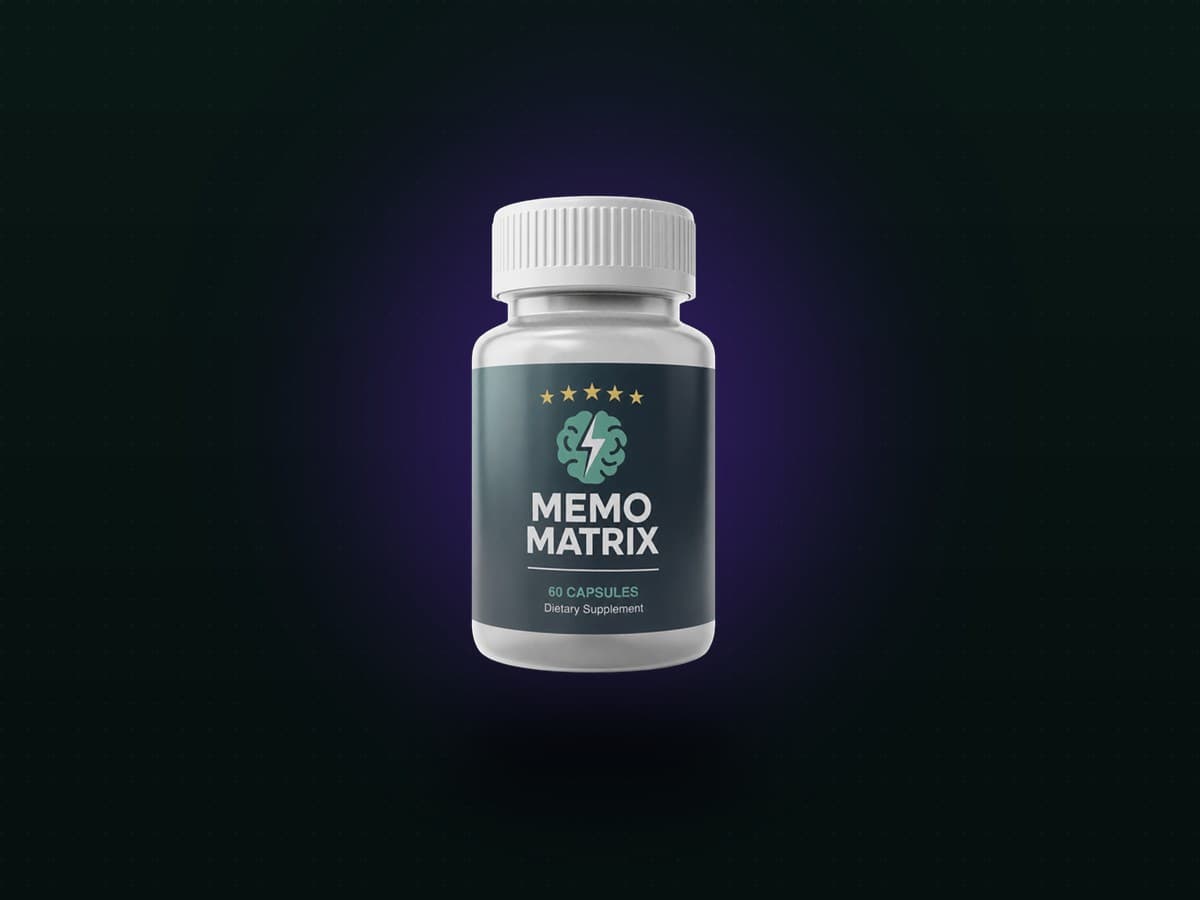
 From $49/bottle
Memo Matrix Review (2026): Ingredients, Evidence & Honest Verdict
Ten tabs open and you’ve forgotten why? Memo Matrix promises to clear the fog with an 8-nutrient nootropic stack. Some ingredients are genuinely good — but “8-in-1” hides a dosing catch. We show you the difference before you spend a cent.
VitaGlobe Editorial Team
Independent product research
Bottom line up front
If you keep walking into rooms and forgetting why, losing names, and feeling a step behind, Memo Matrix is built to support memory and recall. Our review holds each nootropic up to the actual research so you can tell the science from the sales pitch — and it is honest about where the formula delivers and where it is thin. Effects are gradual and supportive, not a cure for memory loss. The 60-day money-back guarantee makes it low-risk — two full months to see how your own mind responds, or your money back. If you try it, get it from the official site so the guarantee applies.
Ten Tabs Open, and You’ve Forgotten Why
Ten browser tabs open and you’ve forgotten why you opened half of them. The name that vanishes mid-sentence. The “brain fog” that turns simple thinking into wading through mud by early afternoon. Memo Matrix is marketed straight at that scattered, foggy feeling, promising to clear it with an “8-nutrient” nootropic stack. Eight ingredients sounds impressive — and some of them genuinely are. But “more ingredients” and “more effect” aren’t the same thing, and this page shows you exactly where the difference lies before you buy.
What Memo Matrix Actually Is
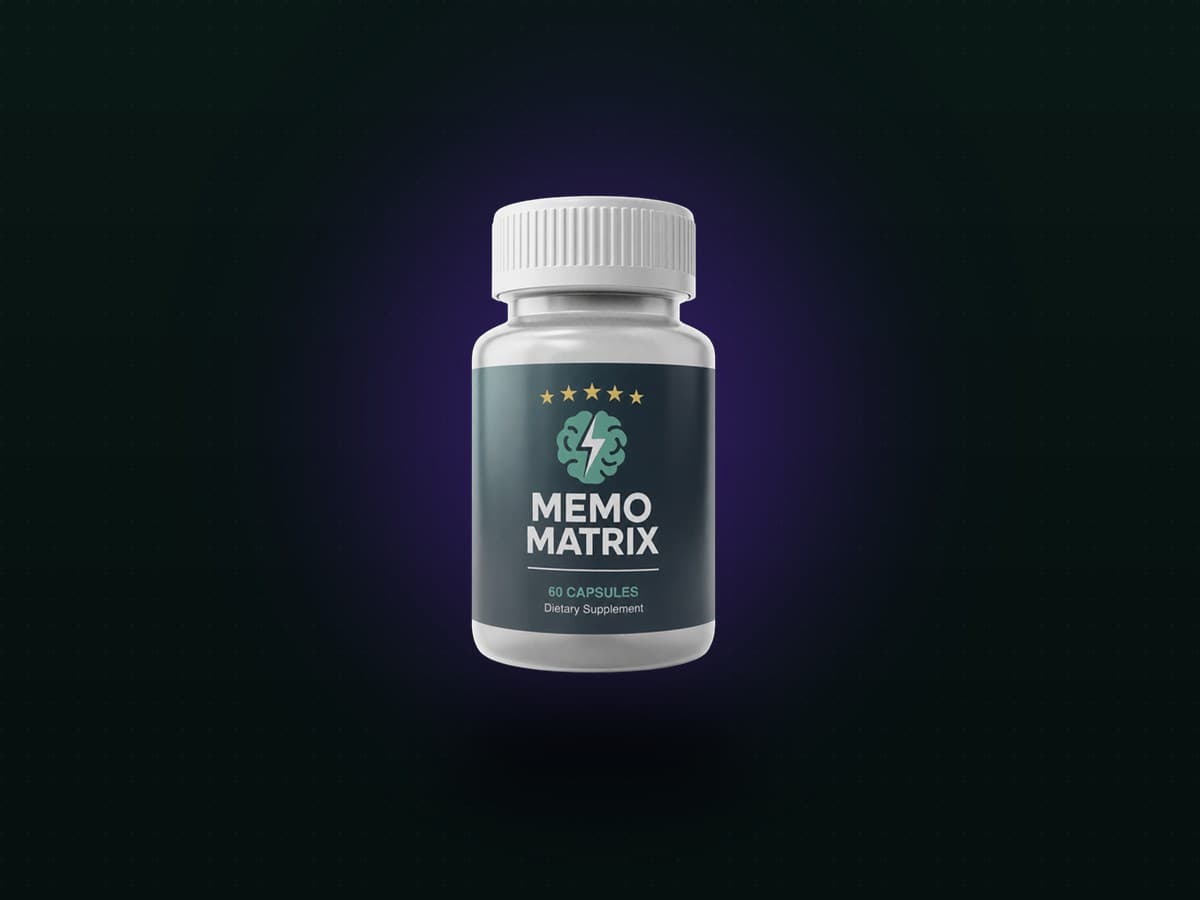
Memo Matrix is a daily nootropic capsule (60 per bottle) positioned for memory, focus and brain fog, built around 8 named ingredients: Bacopa, L-theanine, Lion’s Mane, Alpha-GPC, phosphatidylserine, Ginkgo, Huperzine A and Rhodiola. Naming all eight is a genuine point in its favor — many rivals hide behind a “proprietary blend.” The catch: it names the ingredients but not the doses. Everything below is based on that public information plus peer-reviewed research on the ingredient types — we have not tested the product itself.
The Idea Behind It — and the “8-in-1” Catch
The pitch is comprehensiveness: cover several cognitive levers at once — Bacopa for memory consolidation, L-theanine for calm focus, Alpha-GPC and phosphatidylserine for the brain’s acetylcholine system, Lion’s Mane for nerve growth factor. On paper that’s a thoughtful, multi-angle stack. Here’s the honest catch that big blends rarely admit: fitting eight ingredients into one capsule, at undisclosed doses, makes it entirely possible that each is present in a token amount — enough to list, not enough to work. Naming ingredients (transparency of label) is not the same as disclosing doses (transparency that matters). Judge it on the latter.
What the Research Actually Shows
The line-up is genuinely reasonable. Bacopa has the strongest support for memory (over weeks); L-theanine helps calm, focused attention; Lion’s Mane is promising if early; and Alpha-GPC and phosphatidylserine have modest cognitive research. Two caveats: Ginkgo is famous but underwhelming in large trials, and Huperzine A is potent and best used cautiously, not indefinitely. Without disclosed doses or a trial on the finished formula, there’s no way to confirm the best ingredients are present at researched amounts. For the bigger picture, see our guide to supplements for memory and focus.
Read This Before You Buy
Two things. First, boundaries: no nootropic treats or reverses real memory loss or dementia — cognitive changes that affect daily life need a doctor, not a capsule. Second, foundations: no stack out-performs sleep, exercise and genuine mental effort, which do the heavy lifting for your brain; a supplement is, at best, a small nudge on top. Note too that Huperzine A can interact with some medications — clear it with your doctor if you take any, and don’t plan on taking it indefinitely without guidance.
The Bottom Line — Is It Worth Trying?
Memo Matrix does two things right: it names its ingredients honestly, and it chose good ones. What it withholds — the doses — is exactly what determines whether an 8-in-1 stack actually delivers or just reads well on the label. So treat it as gentle, gradual support, give it consistent weeks (Bacopa needs them), and pair it with real sleep and effort. The maker caps the downside with a 60-day money-back guarantee, so a trial costs mostly patience. If that fits, you can check today’s pricing and the guarantee on the official page — then judge it by your own weeks, not the “think faster at any age” promise.
Ingredients & the evidence
Evidence below is for the individual ingredients in published research — not for the finished product, whose doses are not disclosed.
Bacopa Monnieri
Moderate evidenceDose: Not disclosed
One of the better-supported nootropics: several trials suggest Bacopa can modestly improve memory and learning, though benefits build over several weeks of consistent use rather than appearing right away.
L-Theanine
Limited evidenceDose: Not disclosed
An amino acid from tea that promotes calm, focused attention without sedation — best studied alongside caffeine, but useful where stress or jitter interferes with focus.
Lion’s Mane Mushroom
Preliminary evidenceDose: Not disclosed
A popular nootropic mushroom with encouraging but mostly early evidence — small human studies hint at memory and mood benefits, but the research is still preliminary.
Alpha-GPC & Phosphatidylserine
Limited evidenceDose: Not disclosed
Two choline/membrane ingredients the brain uses to make acetylcholine and maintain cell membranes. Both have some research for attention and age-related memory, though effects are modest and depend on dose.
Ginkgo Biloba
Limited evidenceDose: Not disclosed
Famous, but honestly mixed: despite its reputation, large rigorous trials (such as the GEM study) found ginkgo did not prevent cognitive decline. It is a supporting player, not a proven memory booster.
Huperzine A & Rhodiola Rosea
Limited evidenceDose: Not disclosed
Huperzine A is a compound studied for memory that slows the breakdown of acetylcholine — interesting, but it is potent and not ideal for indefinite daily use without guidance. Rhodiola is an adaptogen that may ease mental fatigue under stress.
Product facts
| Form | Capsules — 60 per bottle (8 nootropics in one capsule) |
|---|---|
| Ingredients | Disclosed by name (Bacopa, L-theanine, Lion’s Mane, Alpha-GPC, PS, Ginkgo, Huperzine A, Rhodiola) — but doses are NOT disclosed |
| Supply options | 2-, 3- and 6-bottle bundles |
| Manufacturing | Claimed US, FDA-registered, GMP-certified facility |
| Money-back guarantee | 60 days |
Not published by the manufacturer: The dose of each ingredient (no Supplement Facts panel before checkout) · Whether the researched, effective amounts (e.g., for Bacopa) are met · Independent third-party lab testing · A verified, independent aggregate customer rating.
Pros & cons
Pros
- A sensible, transparent ingredient list — several genuinely evidence-backed nootropics (Bacopa, L-theanine, Lion’s Mane) rather than a random blend
- All 8 ingredients named on the label, and a claimed GMP / FDA-registered facility
- Once-daily capsule and a 60-day money-back window
Cons
- Doses are NOT disclosed, so you cannot confirm the researched amounts (especially for Bacopa) are actually present
- Effects are modest and build over weeks — this is gentle support, not a dramatic upgrade
- Ginkgo is included despite disappointing large-trial results, and Huperzine A is potent (not ideal for indefinite daily use without guidance)
- No published clinical trial on the finished Memo Matrix formula and no third-party testing
- Not a treatment for memory loss, dementia or any condition
Claims we couldn’t independently verify
- The official page does not publish a clear, independently verified star rating, so we show none.
- No clinical trial on the finished Memo Matrix formula is published — cited evidence is for the individual ingredients.
- “At any age” / “think faster” language is marketing; treat the supplement as gentle support, not a cure.
Who it’s for — and who should skip it
May suit you if you…
- Adults who want a disclosed, sensibly-formulated nootropic stack for focus and memory, with realistic expectations
- People who prefer one capsule combining several researched ingredients and value a 60-day guarantee
Skip it / see a doctor if you…
- Anyone with genuine memory loss or cognitive changes that affect daily life — that needs a doctor, not a supplement
- People on medication (Huperzine A in particular can interact) or who are pregnant or nursing, without medical advice
- Buyers who want to see exact doses and third-party testing before paying
- Anyone expecting a dramatic “limitless” effect
Price, guarantee & where to buy
| Package | Price |
|---|---|
| 6 bottles (180-day) | $49/bottle ($294) |
| 3 bottles (90-day) | $69/bottle ($207) |
| 2 bottles (60-day) | $79/bottle ($158) |
Pricing is set by the seller and can change. Always confirm on the official site before buying.
60-day money-back guarantee (manufacturer-stated)
Frequently asked questions
Does Memo Matrix actually improve memory?
A few of its ingredients (Bacopa, L-theanine, Lion’s Mane) have real, if modest, research for memory and focus, usually over weeks of use. But Memo Matrix does not disclose its doses and there is no trial on the finished product, so results vary and cannot be guaranteed.
Is it safe to take every day?
For healthy adults the individual ingredients are generally well tolerated, but Huperzine A is potent and not ideal for indefinite daily use without guidance, and it can interact with some medications. Check with a doctor if you take anything or have a health condition.
Can it treat memory loss or dementia?
No. Memo Matrix is a dietary supplement for general cognitive support, not a treatment. Memory changes that affect daily life need medical evaluation, not a supplement.
What does it cost and is there a guarantee?
Pricing runs from $79 per bottle (2-bottle) down to $49 per bottle (6-bottle), with a 60-day money-back guarantee. Prices are set by the seller and can change.
Our verdict
If you keep walking into rooms and forgetting why, losing names, and feeling a step behind, Memo Matrix is built to support memory and recall. Our review holds each nootropic up to the actual research so you can tell the science from the sales pitch — and it is honest about where the formula delivers and where it is thin. Effects are gradual and supportive, not a cure for memory loss. The 60-day money-back guarantee makes it low-risk — two full months to see how your own mind responds, or your money back. If you try it, get it from the official site so the guarantee applies.
Visit the official site (From $49/bottle)60-day money-back guarantee (manufacturer-stated)
Compare related reviews
Honest, evidence-based breakdowns of similar supplements.

Memo Matrix
60-day money-back guarantee (manufacturer-stated)